Solaria.
Internal ops platform for a restaurant group — outlet data, product catalog, logistics workflows
What we were solving for.
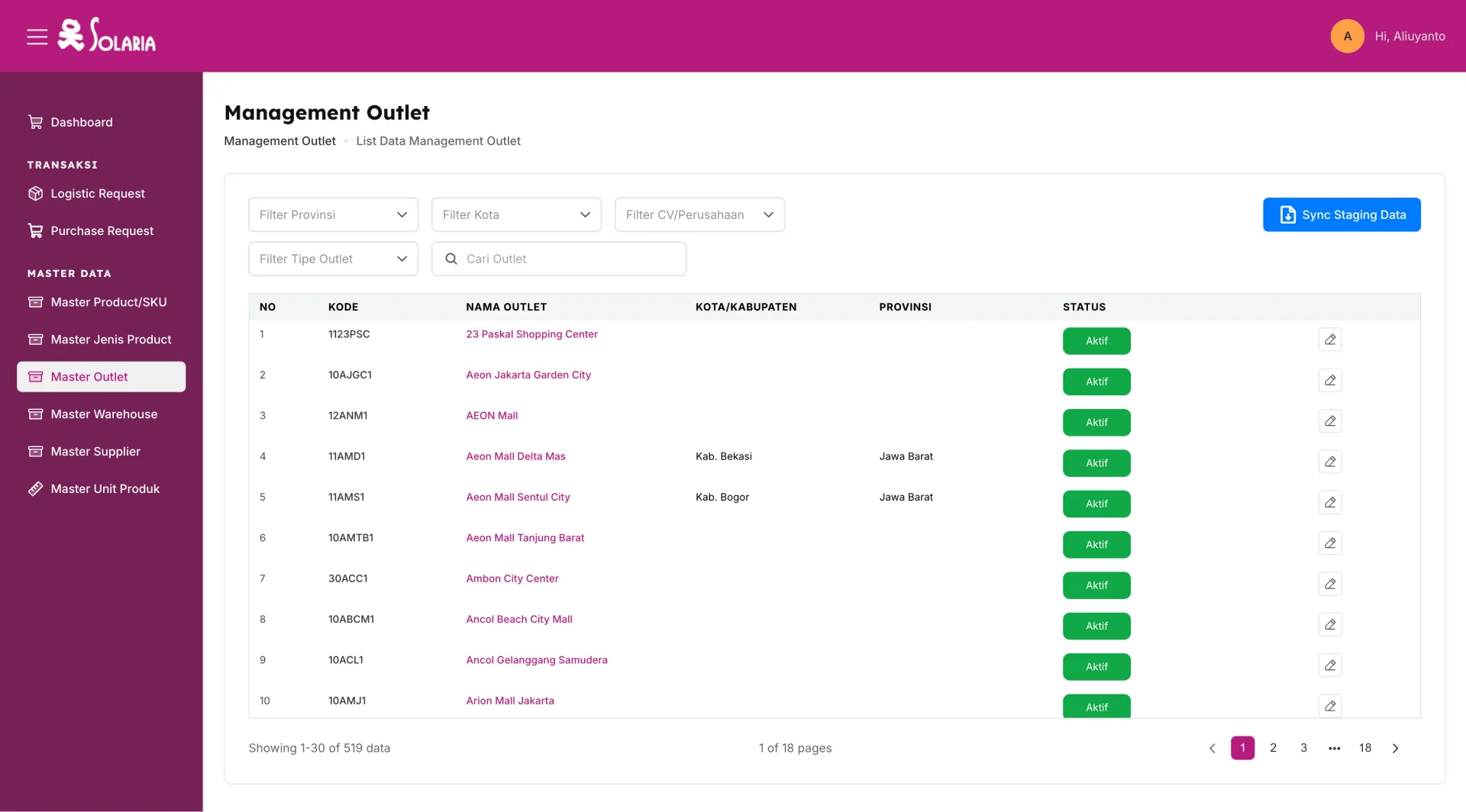
Solaria runs hundreds of restaurant outlets across Indonesia. The ops team was running most of the day-to-day on spreadsheets — outlet master data, product catalog, logistics requests, scheduled orders, inter-outlet transfers. It worked (barely) at their scale, but broke silently in ways that only surfaced when an outlet ran out of stock or an inter-outlet request never routed to the right central kitchen.
The client's ask was direct: replace the spreadsheets with something purpose-built, so the ops team could stop firefighting and start managing. But the spreadsheets encoded years of institutional workflow logic — every dropdown, every color-coded row, every ad-hoc formula reflected a real business rule. Ignoring that logic in a rebuild would have been fatal.
The system also needed to be usable by staff whose primary skill isn't software — accountants, warehouse leads, outlet managers. That constraint shaped every interaction design decision.
How we built it.
We started by sitting with the ops team. Not interviewing them — watching them work. Every workflow, every keystroke, every "why do you do it that way" question. Three days of observation produced the requirements document that would have taken weeks of meetings to write.
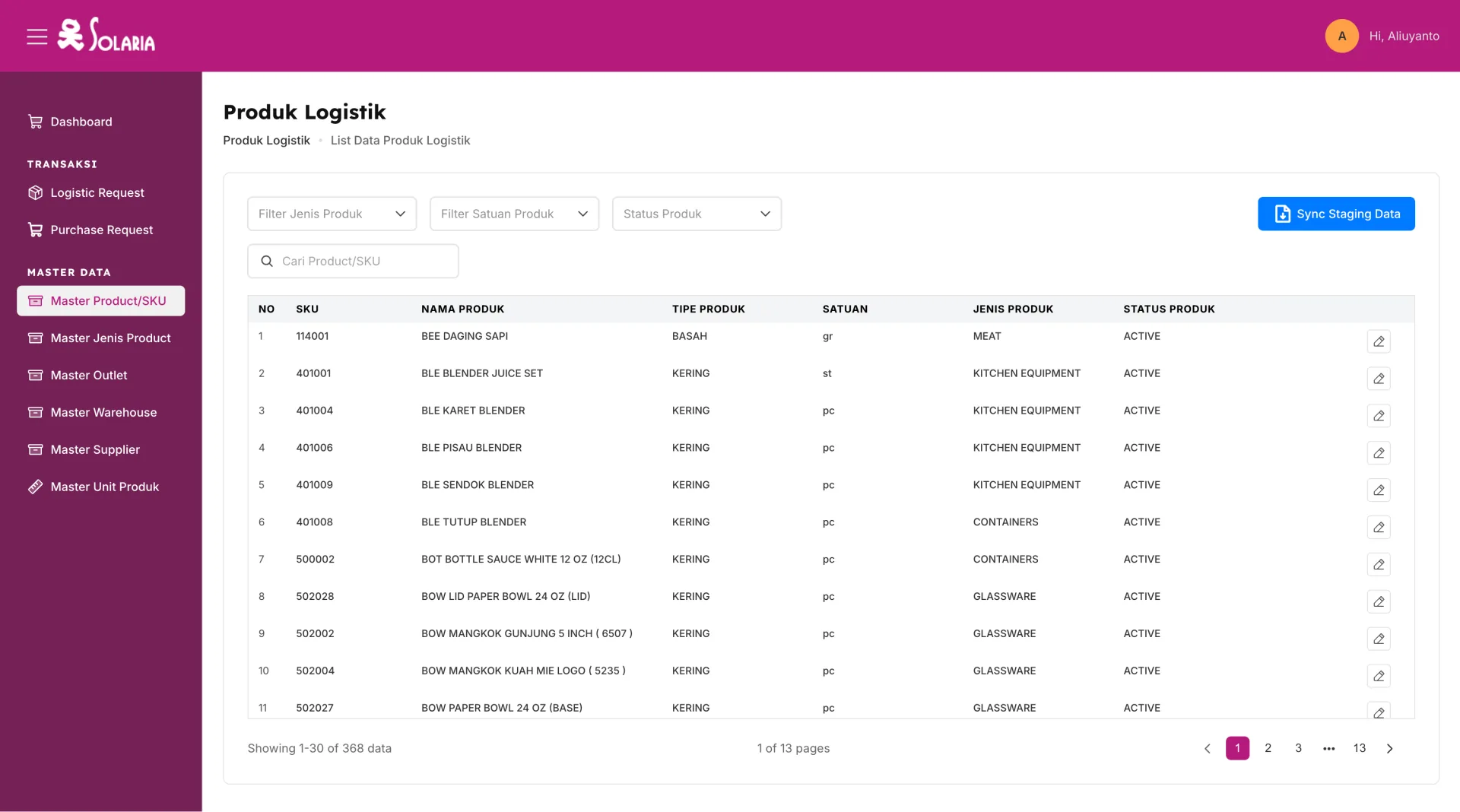
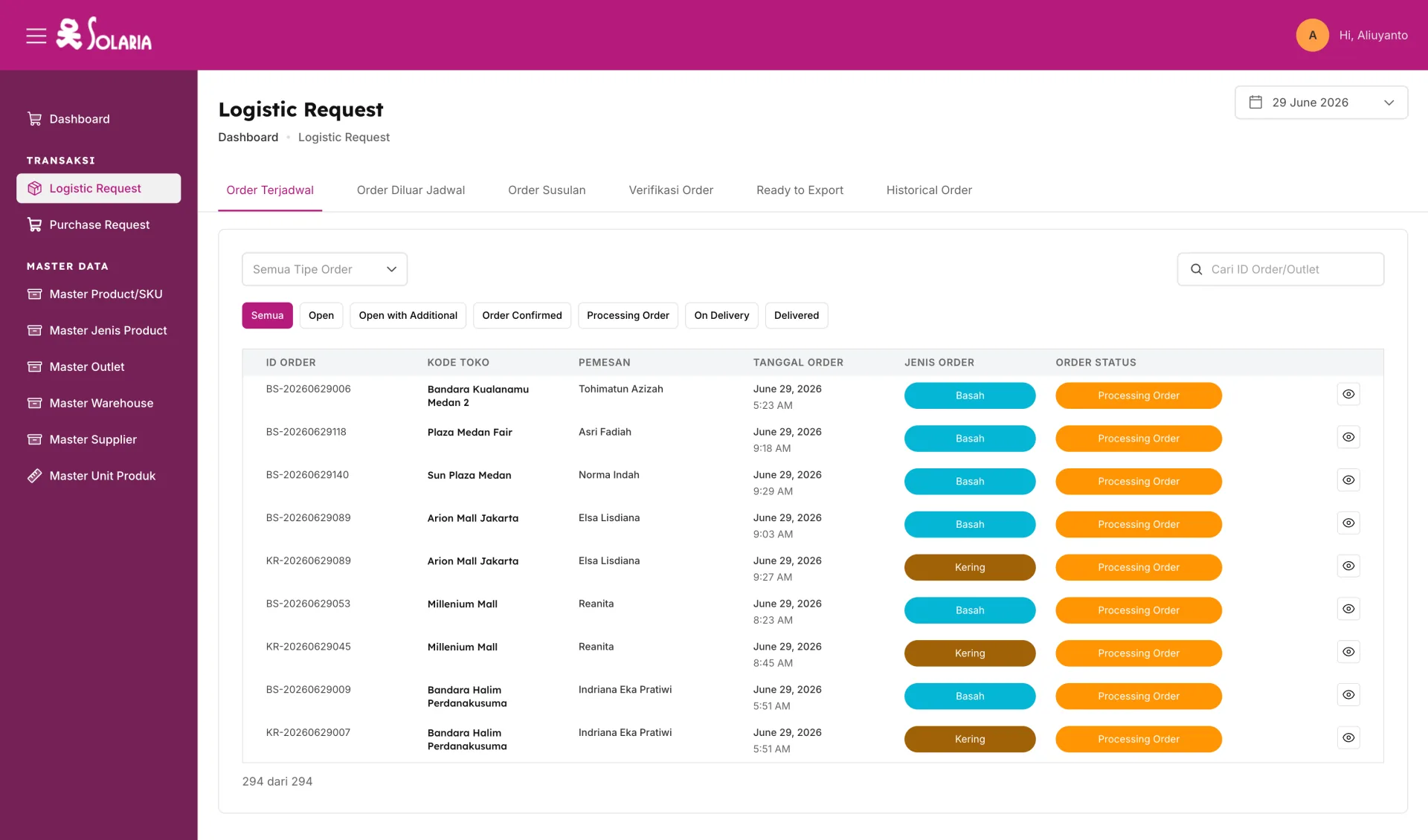
The system was built as a modular admin platform: master data (outlets, products, categories, suppliers), transactional workflows (logistics requests, scheduled orders, transfers), and reporting on top of both. Every module ships with role-based permissions so an outlet manager only sees their outlet's data, while regional ops leads see across a cluster.
The interface deliberately leans "familiar over novel." Tables act like spreadsheets. Sorting, filtering, and bulk actions work how Excel users expect them to. The novelty is in the workflow engine underneath — status routing, notification triggers, audit logs — not in reinventing patterns that already work.
What was in the build.
- Master data admin (outlets, products, suppliers)
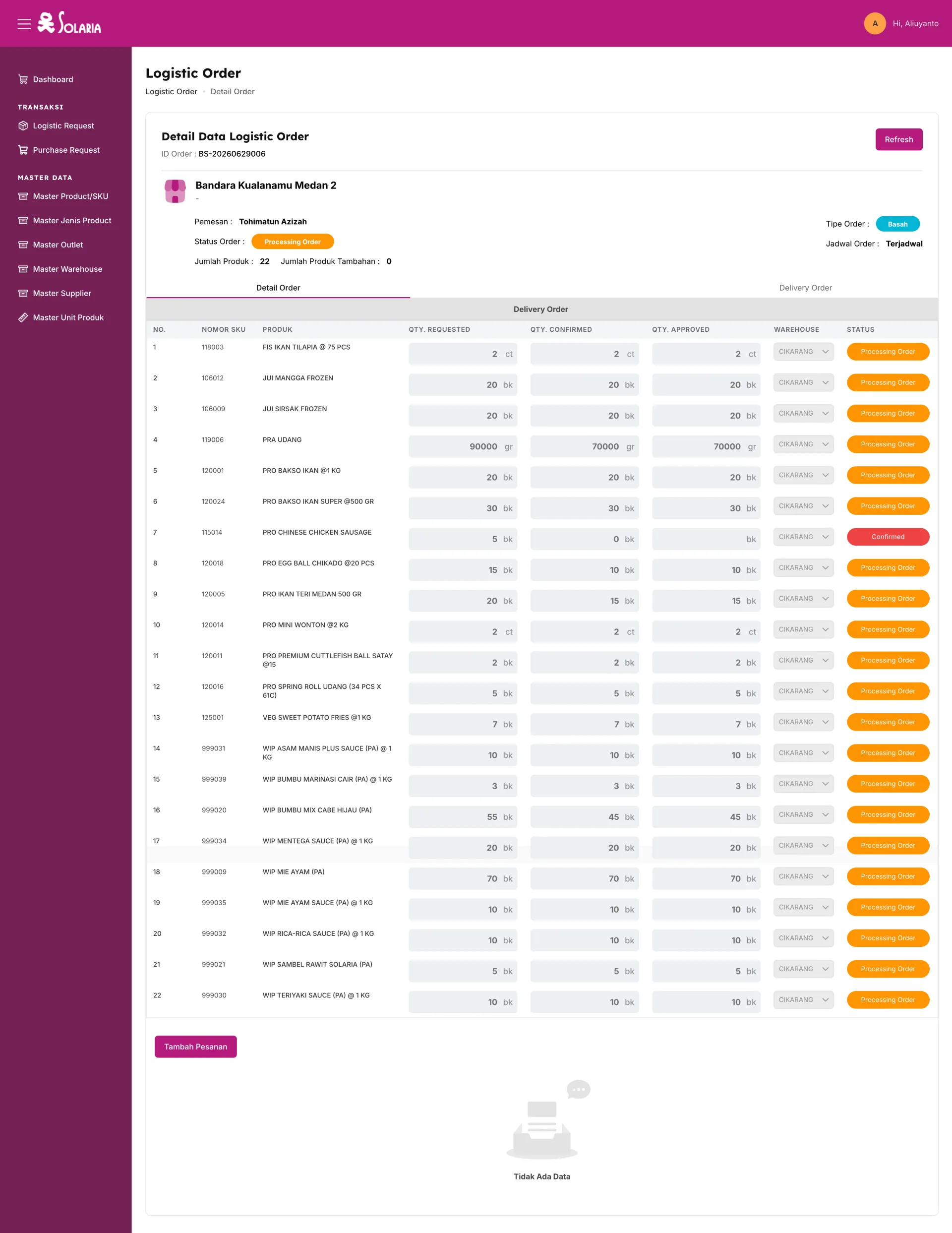
- Logistics request workflow + routing
- Scheduled order management
- Inter-outlet transfer workflows
- Role-based permissions per outlet + region
- Audit logging + reporting
- Migration from legacy spreadsheets
The stack.
Frontend
React, TypeScript, Custom admin design system
Backend
Node.js, PostgreSQL, Redis, BullMQ
Auth
Role-based access control, Audit logging
Infrastructure
AWS, Docker, Custom deploy pipeline
What shipped.
Solaria's ops team moved off spreadsheets. The bottleneck workflows — logistics request routing, scheduled order approval — now happen in-system with a clear audit trail. Institutional knowledge that used to live in one person's head lives in the system's business logic instead.
The client's feedback: "Our ops team used to live in spreadsheets. Now they live in something that actually helps — and I get fewer questions every week."
By the numbers.
"Our ops team used to live in spreadsheets. Now they live in something that actually helps — and I get fewer questions every week."
The work.
Services behind this build.
CRM & ERP Integration
Custom integrations, workflows, and dashboards that connect your business systems and surface the data your team needs to act.
Explore AutomationBusiness Systems & Automation
Internal ops tools, admin dashboards, approval workflows, notifications, and reporting — the systems that let your team run at 5× speed without hiring 5× headcount.
ExploreMore work.
Coinsiren
Community-driven crypto discovery surface for the South Korean market
Read case Ecommerce · WebOctarine
Brand and storefront for a lifestyle label — drop-led commerce and quiet checkout
Read case Web · Business SystemsFloq
Trading and education platform pairing live market data with a structured learning path
Read caseBuild something similar.
Every project starts with a discovery call. Written scope within 3 business days.