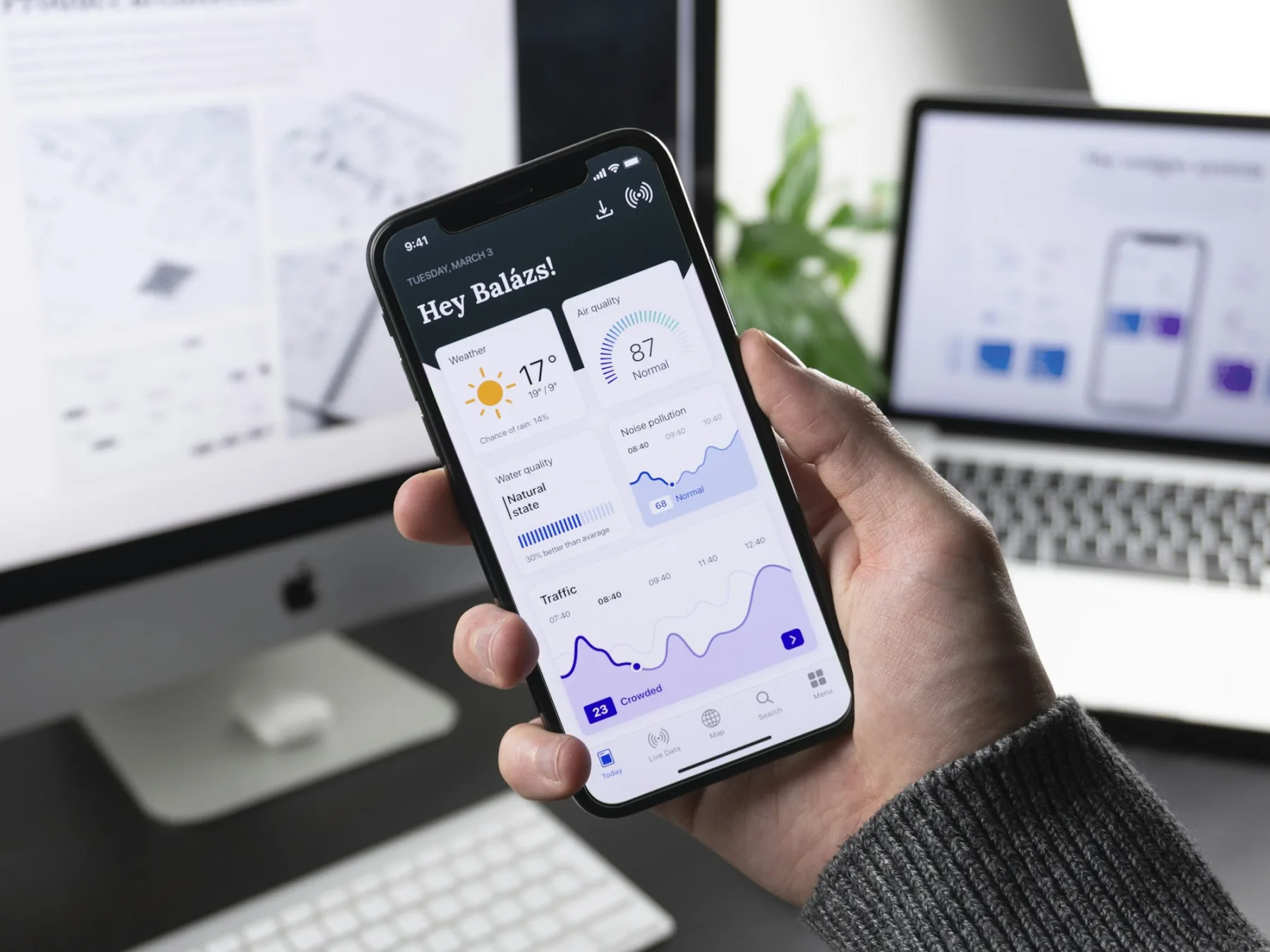
"How much does a mobile app cost?" is like asking "how much does a car cost?" — anywhere from $15,000 to $500,000+ depending on what you're building. Here are the honest 2026 numbers by category.
MVP apps ($15,000–$30,000)
The minimum viable version of your idea. Enough to test the concept, run pilots, or hand to early users.
What's included:
- 5–10 core screens
- One backend (Firebase, Supabase, or lightweight custom)
- Auth (email + Google or Apple sign-in)
- Basic push notifications
- App Store + Play Store submission
What's not:
- Fancy custom UI animations
- Payments (adds ~$3,000–$5,000)
- Offline mode (adds ~$2,000–$4,000)
- Multi-language support
- Admin dashboard
Timeline: 8–12 weeks.
Consumer apps ($30,000–$80,000)
Full-featured consumer apps with payments, social features, and design polish.
What's included:
- 15–30 screens
- Custom backend with proper data modelling
- In-app purchases or subscription
- Social features (profiles, following, notifications)
- Deep-linking, analytics, crash reporting
- App Store optimisation basics
Timeline: 16–24 weeks.
Enterprise or B2B apps ($60,000–$200,000+)
Apps that must integrate with existing enterprise systems (Salesforce, SAP, custom ERPs), support SSO, handle offline sync, and comply with data regulations.
What drives the cost:
- SSO integration (Okta, Azure AD): +$5,000–$10,000
- Offline-first architecture: +$8,000–$15,000
- Compliance work (HIPAA, SOC 2): +$10,000–$30,000
- Custom backend integrations: +$10,000–$40,000
- Multi-role admin panel: +$8,000–$20,000
Timeline: 20–40 weeks.
The parts non-developers underestimate
Backend. A mobile app needs a backend. Even a simple app needs auth, data storage, and business logic living somewhere. Backend cost is often 30–50% of total app cost. Ignore it in your budget at your peril.
App Store submission. Not just uploading a binary. Screenshots, marketing copy, privacy policy generation, App Store Optimization keywords, review-response process. Budget $1,500–$3,000 for this.
Post-launch. iOS and Android release breaking changes every year. Third-party libraries update. Real users find bugs your QA missed. Post-launch maintenance runs $500–$5,000/month depending on your app's complexity.
Payments. If you take money in-app, Apple takes 15–30% for consumables and subscriptions. Stripe takes 2.9% + 30¢ for external transactions. This affects your unit economics, not your build cost — but plan for it.
What agencies quietly upcharge for
- Design revisions beyond the initial scope (add revision limits in contract)
- Backend "hosting setup" that should be included
- App Store submission ("we don't do that, we can hire someone for $2,000")
- Push notification setup as a "specialty"
Ask for itemised proposals. Anything vague is where the surprise invoices come from.
Cross-platform vs native
Cross-platform (Flutter, React Native): Single codebase for iOS + Android. Roughly 60–70% of the cost of building both natively.
Native (Swift + Kotlin): Two codebases. Deeper platform integration when you need it. Higher long-term maintenance.
For 90% of business apps, cross-platform is the right economic choice. See our <a href="/blog/flutter-vs-react-native-2026/">Flutter vs React Native</a> breakdown.
How to plan a realistic budget
- Core MVP scope: $20,000
- Backend: $8,000
- Payments/subscriptions if applicable: +$4,000
- App Store + Play Store submission: $2,000
- Post-launch buffer (3 months): $6,000
Baseline realistic total for a first serious app: $40,000.
If someone quotes you $8,000 for a full app, that quote is either wrong or hiding scope you'll pay for later.
Book a consultation and we'll walk through what your specific idea actually costs.